

As a principal investigator on a nearly $890,000 National Science Foundation grant, Bridget Mulvey, a 红杏视频 Associate Professor of Science Education in the College of Education and Human Services, is helping students see science as a living, dynamic way of making sense of the world.
Titled, 鈥淪eparating the Signal from the Noise,鈥� the project is a three鈥憏ear collaboration among 红杏视频, the Concord Consortium, the University of Washington, and the Anchorage School District. Its ambitious goal is to empower Alaskan middle school students to investigate local natural and human鈥慶aused seismic events using seismic data and machine learning techniques used by seismologists, or scientists who study Earth鈥檚 vibrations like earthquakes.
Mulvey also serves as the project鈥檚 research lead, guiding the scientific vision while also supporting the development of the machine learning curriculum module and teacher training. Her work ensures that students aren鈥檛 just learning about earthquakes鈥攖hey鈥檙e learning to think and act like scientists and data analysts.
A Classroom Built on Shaky Ground
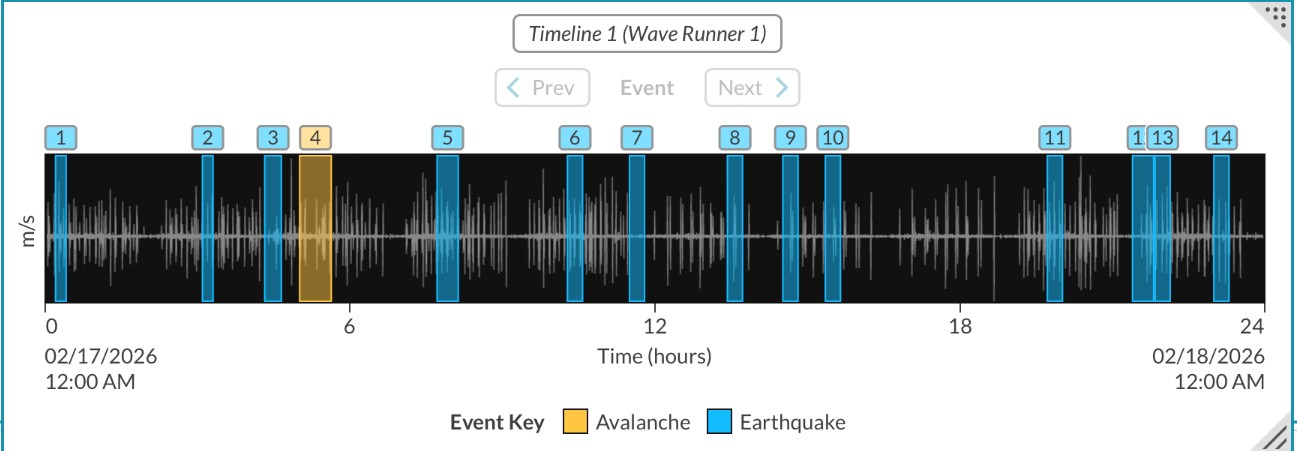
Because Anchorage is one of the most seismically active regions in the United States, the region experiences earthquakes, rockslides, avalanches, ocean waves, and even human activity鈥攆rom concerts to construction鈥� that send vibrations through the Earth鈥檚 crust. Students participating in the project will install scientific鈥慻rade seismometers in their schools to collect real鈥憈ime data and use machine learning models to classify any seismic events they detect.
鈥淲hen students use machine learning to analyze seismic data, they鈥檙e not just learning about earthquakes, they鈥檙e learning how to make sense of complex, real鈥憌orld datasets,鈥� said Mulvey. 鈥淚t gives them a way to see the Earth鈥檚 surface as an evolving system they can genuinely investigate. When we show them that the ground beneath them has a story to tell, we can also show them that they have the tools to listen and decipher it.鈥�
Research Based in Scientific Concepts
Mulvey鈥檚 involvement is grounded in the project鈥檚 research goals, understanding how integrating computational practices into science classrooms affect students鈥� attitudes, scientific investigation skills, and their understanding of Earth science concepts.
鈥淭his seismic project is more than a curriculum, it鈥檚 a blueprint for how schools can integrate computer science, Earth science, and data literacy in ways that feel meaningful and connected to students,鈥� Mulvey said. 鈥淏y giving young people access to real seismic data and the tools to analyze it, this project helps them build scientific understanding and computational confidence.鈥�